

So, you’ve poured your heart into your manuscript, shaped your chapters, and even imagined your dream cover. But then you pause: “Should I capitalize this word in my title? Or leave it lowercase?”
Don’t worry you’re not the only one asking. Capitalization rules can feel confusing at first, but once you learn them, you’ll never second-guess yourself again. This blog is the author’s complete guide to title capitalization, designed to help you nail your book titles, chapter headings, and subtitles every single time.
Why Capitalization Matters for Authors
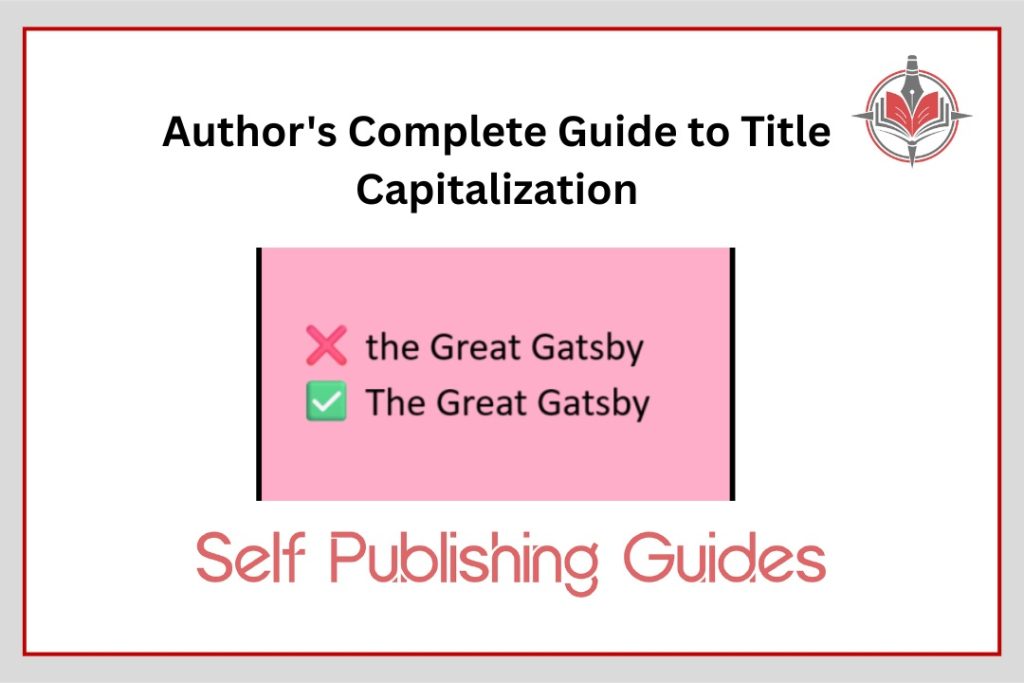
Your title is the first thing readers see. A poorly capitalized title like the Sun also rises looks amateurish. A properly polished one like The Sun Also Rises looks professional.
That’s the power of capitalization: it gives your book authority before the reader even opens it. A solid author’s book title style guide makes sure your words shine.
Title Case vs. Sentence Case
Let’s start with the basics:
- Title Case: Capitalize the “important” words. This is what most books use.
- Example: The Catcher in the Rye
- Example: The Catcher in the Rye
- Sentence Case: Capitalize only the first word and proper nouns.
- Example: How to write a book in 30 days
- Example: How to write a book in 30 days
In publishing, Title Case is the go-to choice. That’s why this author’s complete guide to title capitalization focuses on Title Case rules.
The Core Rules of Title Capitalization
Here’s where things get clear.
Always Capitalize:
- The first and last word of the title (no matter what they are).
- Nouns (cat, river, book)
- Pronouns (he, she, it, they)
- Verbs, even short ones (is, be, run, do)
- Adjectives (bright, quiet, strong)
- Adverbs (slowly, always, very)
- Subordinating conjunctions (because, although, since)
Don’t Capitalize (unless first or last):
- Articles (a, an, the)
- Coordinating conjunctions (and, but, or, so, for, yet)
- Short prepositions (in, on, at, by, of, to)
Once you practice, these rules will become second nature. This author’s book title style guide will keep you on track.
Different Style Guides: Which One Should Authors Use?
Here’s where things shift a little:
- Chicago Manual of Style (CMOS): Most common for book publishing. Lowercases all prepositions and conjunctions, no matter length.
- Associated Press (AP Style): Caps prepositions and conjunctions of four or more letters.
- Modern Language Association (MLA): Often used in academic circles. Similar to Chicago but stricter about infinitives and prepositions.
For self-published authors, Chicago Style is your safest bet. That’s why the author’s complete guide to title capitalization uses Chicago as the main reference point.
Special Cases That Confuse Authors
Let’s tackle those “uh-oh” moments:
- Infinitive “to”: Always lowercase.
- How to Write a Novel
- How to Write a Novel
- Hyphenated words: Cap both parts if they’re important.
- Self-Discovery Journey
Lowercase the second if it’s just a prefix. - Mid-year Growth
- Self-Discovery Journey
- Numbers: If spelled out, capitalize like a word.
- Twenty-One Lessons for the 21st Century
- Twenty-One Lessons for the 21st Century
- Colons in titles: Always capitalize the first word after a colon.
- Eat, Pray, Love: One Woman’s Search for Everything
- Eat, Pray, Love: One Woman’s Search for Everything
- Subtitles: Follow the exact same rules as the main title.
- Becoming: The Story of Michelle Obama
- Becoming: The Story of Michelle Obama
These little details are where an author’s book title style guide makes life easier.
Examples: Right vs. Wrong
- Wrong: gone With the Wind
- Correct: Gone with the Wind
- Wrong: To Kill A Mockingbird
- Correct: To Kill a Mockingbird
- Wrong: all Quiet On the Western Front
- Correct: All Quiet on the Western Front
That’s why this author’s complete guide to title capitalization includes so many examples because seeing it in action makes the rules stick.
Consistency Is Everything
If your chapters, TOC, and headings switch styles halfway through, readers will notice. It might not stop them from reading your book, but it will make your work look less professional.
So the golden rule? Pick a style and stay consistent. That’s the heart of this author’s complete guide to title capitalization.
Quick Checklist for Authors
Before hitting publish, ask yourself:
- First and last word capitalized?
- Major words capped (nouns, verbs, pronouns, adjectives, adverbs)?
- Small words lowercase (unless first/last)?
- Hyphenated words handled properly?
- Subtitles consistent?
Stick to this, and you’ll have a reliable author’s book title style guide built into your writing habits.
Final Thoughts
Capitalization may seem small, but it sends a huge signal about your professionalism. Titles, subtitles, and headings polished with consistent capitalization instantly make your book more appealing.
Use this author’s complete guide to title capitalization as your go-to resource. And whenever in doubt, return to these rules, examples, and checklists. With practice, you won’t even have to think about it, you’ll just know.
Because when you combine great storytelling with clean presentation, readers take you seriously. And that, more than anything, is what gets books into hands, hearts, and shelves